Pat Stahl | November, 2026
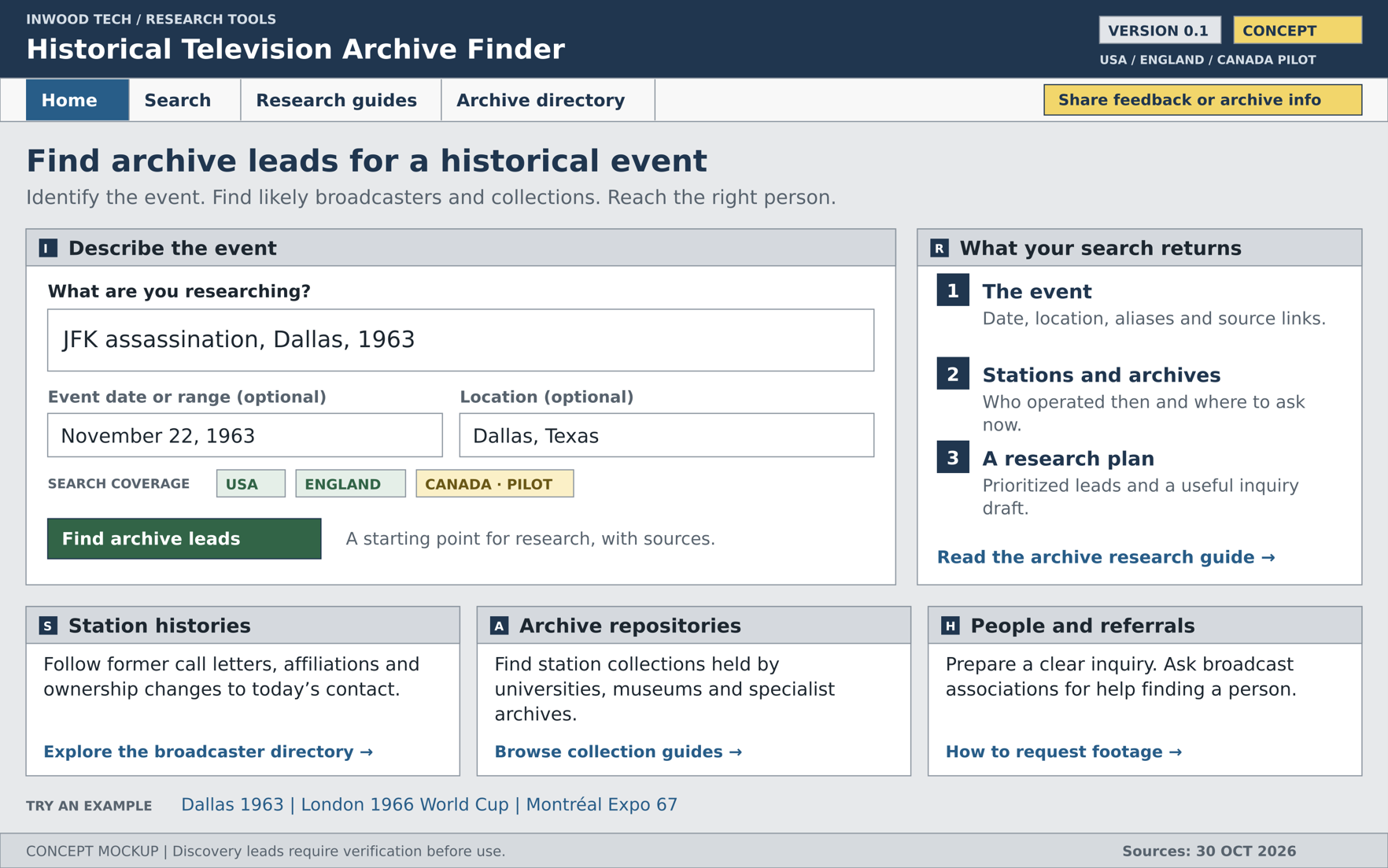
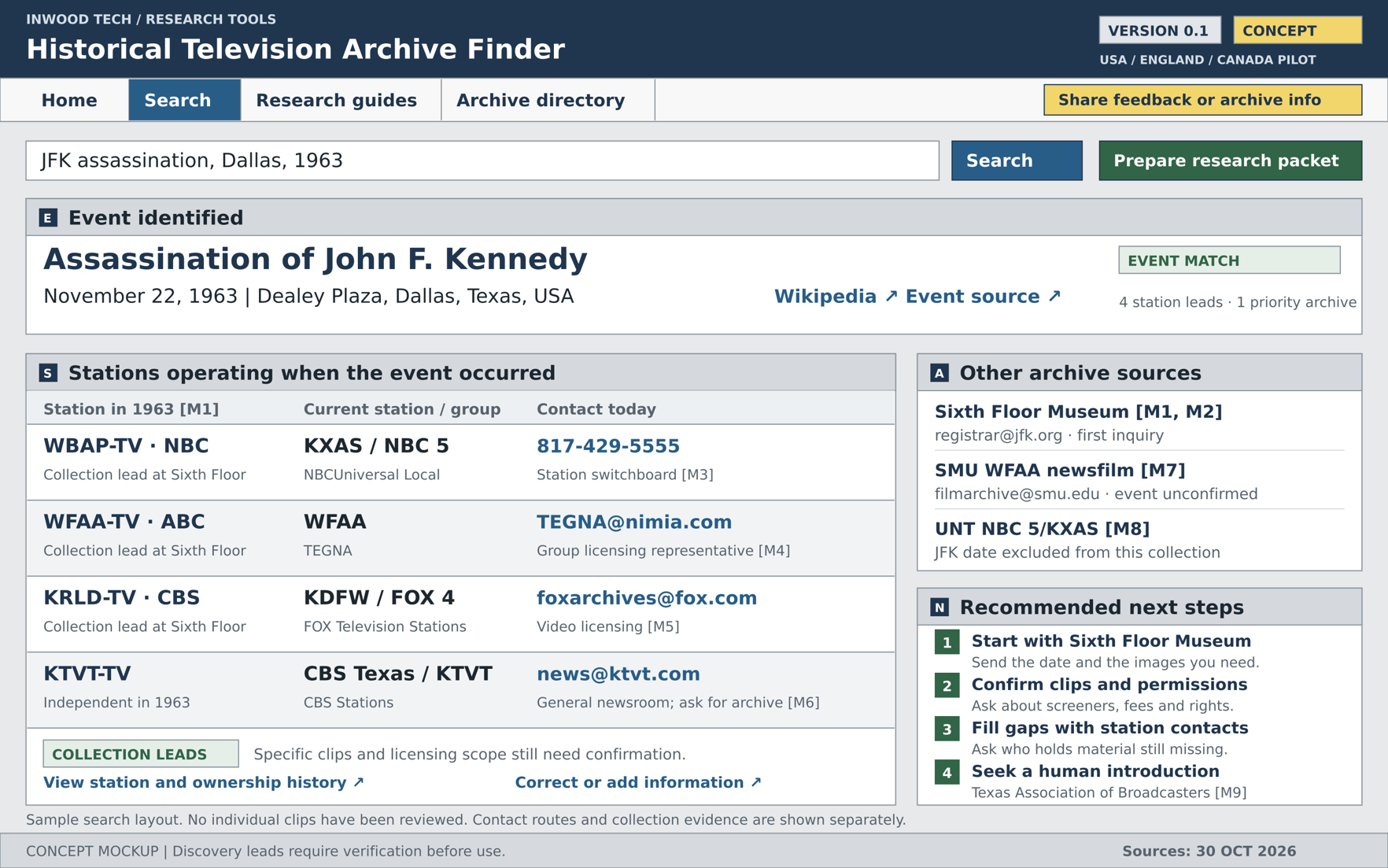
A producer who knows what happened should be able to discover who may still hold the pictures. This proposed web tool translates a description of a historical event into a sourced list of television stations, archive repositories, and people to contact. It establishes the event date and location, identifies broadcasters relevant at that time, and traces surviving collections to their present custodians and licensing representatives. Version 1 will cover the USA and England, with Canada included where reliable source and contact coverage can be established.
The intended users include documentary and drama producers, archive researchers, journalists, museums, and educators. Their immediate need is an actionable research lead: why a source is relevant, what evidence exists, and how to reach the appropriate person. The product would combine event research with a growing directory of broadcaster histories and archive relationships. Guides, tailored inquiry drafts, and optional email integration would help users follow a search through to an answer.
The production use case
Consider a producer seeking footage of a factory closure in northern England in the 1980s, or a civil rights demonstration in an American city. A present-day station directory does not establish which broadcaster covered the event, whether recordings survive, or whether those recordings have moved to a university or regional archive. The tool would reconstruct those relationships, distinguish contemporary coverage from later retrospectives, and identify useful catalog records or human contacts. It could also help a newsroom find anniversary material or a museum assemble a local history exhibition.
From an event description to an inquiry
Establish the event. Resolve names, date ranges, locations, and related people using cited sources. Ask the researcher to choose when a description could identify several events.
Identify relevant sources. Match the event to broadcasters operating then, their successor organizations, and known repositories. Include nearby or national coverage when justified by the event.
Prepare the next action. Return ranked leads, official contacts, ownership information, and an explanation of the evidence. Assemble an inquiry draft and a research packet that records the sources already checked.